What looks like a single screen to the viewer is, in reality, an ecosystem of operating systems, manufacturers, devices, model years and hardware generations, from Samsung Tizen, LG webOS and Android TV to Roku, Fire TV, games consoles, set-top boxes and emerging platforms.
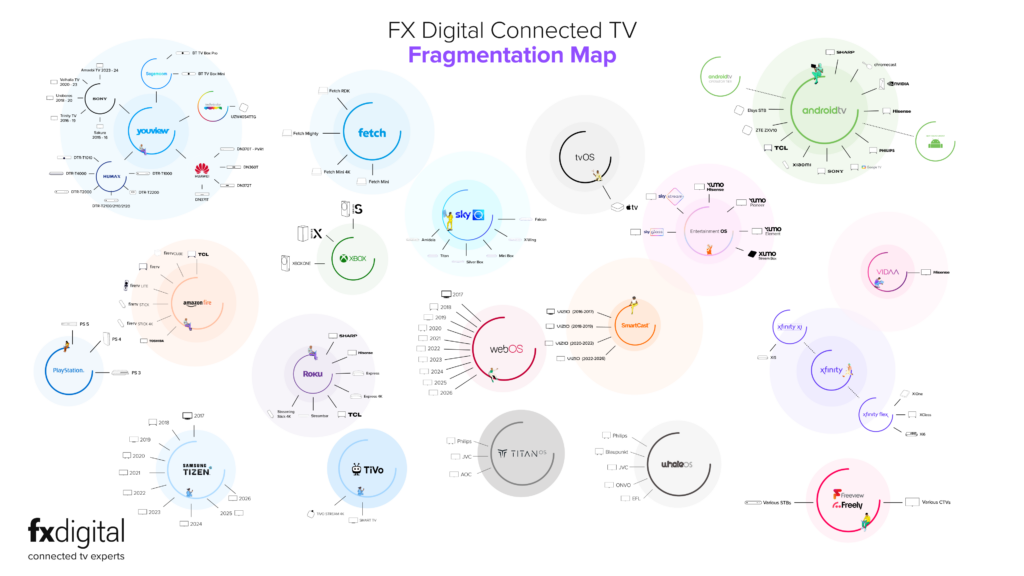
For FX Digital, this fragmentation is at the heart of what we do. Building a Connected TV application isn’t simply about supporting a list of platforms. It means understanding how applications behave across different devices and generations, accounting for variations in performance, capabilities and platform requirements, and ensuring the experience remains reliable as the ecosystem evolves.
Our work spans the full CTV lifecycle: designing and developing applications for fragmented environments, testing them across real devices, and using automation to maintain quality at scale. Our device coverage extends back to TV models from 2017, reflecting a fundamental reality of the living room: TV hardware can remain in use for many years.
The map represents both the challenge our clients face and the expertise FX Digital has built to address it. Fragmentation is not an edge case in Connected TV. It is the environment we build for.
How FX Digital Navigates the Ecosystem
We support products across their lifecycle, from development through to testing and release.
Tailored CTV Development: Building high-quality experiences across platforms and hardware generations, including legacy TV models dating back to 2017.
200+ Physical Device Lab: Testing on the Smart TVs, streaming devices and set-top boxes audiences actually use, not just emulators. Check our Test Automation Device Lab.
Quality & Test Automation: Scaling QA across fragmented device estates through automated testing, improving coverage and release confidence. Check our Quality Assurance Services.